

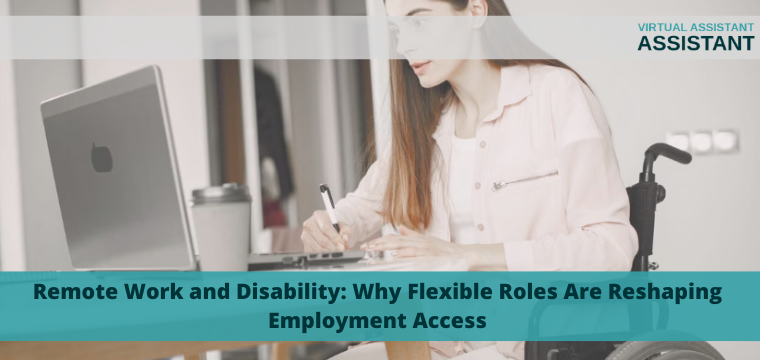
Remote work has shifted from a pandemic experiment to a permanent feature of modern employment. For many people with disabilities, flexible roles are not about comfort but about access.
When work moves beyond a single physical location, the door to employment opens wider.
Table of Contents
Removing Physical Barriers
Traditional offices often come with hidden obstacles for people with various disabilities. Transportation gaps, inaccessible entrances, and sensory-heavy environments can make daily attendance exhausting or impossible.
Remote working options have created new employment opportunities for some people with disabilities. For someone who cannot rely on public transit or who struggles with building access, logging in from home removes a major barrier before the workday even begins.
Energy once spent navigating stairs, long commutes, or overstimulating offices can now go toward actual job performance. Flexible roles reduce friction and increase sustainability.
Driving Employment Growth
Access is not just theoretical. Data shows measurable change in workforce participation.
An analysis by the American Economic Association found that employment for workers with a physical disability rose by 12.4 percent through 2024 due to remote opportunities. Growth at that scale represents thousands of individuals gaining income, stability, and career momentum.
And flexibility is a powerful tool for labor-market inclusion. Flexible scheduling helps people manage medical appointments, therapy sessions, and fluctuating symptoms without leaving the workforce entirely.
Supporting Health and Stamina
Many disabilities involve variable energy levels. Chronic pain, autoimmune conditions, and neurodivergence can affect concentration and endurance throughout the day.
Remote roles allow workers to build routines that support their health. Short rest breaks, adaptive equipment, and customized lighting, for example, are easier to manage in a home environment.
The Inclusive Remote and Hybrid Working Study from Lancaster University highlights that inclusive remote design can help narrow disability employment gaps. When flexibility is intentional rather than accidental, long-term retention improves.
Aligning Work With Benefits Systems
Many people with disabilities explore flexible and/or remote roles while receiving benefits. Those benefits protect them during periods of limited capacity.
In the UK, for example, individuals whose disability, neurodivergence, or other health condition limits their ability to work may need to complete a Work Capability Assessment.
When getting ready for a work capability assessment, it will be helpful to read a guide. For example, CareScribe mentions the process may involve face-to-face interviews and a medical assessment.
The goal of the assessment is to establish whether the condition affects someone for at least half of their time at work. If it does, successful applicants could access Extra Universal Credit (UC) or New Style Employment and Support Allowance (ESA).
Creating Inclusive Systems
Access expands when employers design policies with intention. Remote work alone does not guarantee inclusion. Clear accommodation pathways and accessible technology matter.
Inclusive flexible workplaces often provide:
- Transparent remote-accommodation processes
- Accessible digital communication platforms
- Schedule options that reflect medical realities
Structured flexibility builds trust. Workers are more likely to stay and grow when they know their needs will be respected.
Leadership culture also plays a defining role. Managers who normalize accommodation conversations and measure performance by outcomes rather than hours online create space for honest dialogue.
Also, training teams on disability awareness and inclusive communication ensures flexible policies are applied consistently, not selectively. When inclusion becomes part of daily operations instead of a special exception, flexible work models deliver lasting impact.
Making Flexible Work Truly Accessible
Flexible roles are reshaping employment access by removing physical barriers, driving measurable job growth, supporting health management, and aligning with benefits systems. Remote work and disability are deeply connected in today’s labor market.
Organizations that invest in thoughtful remote policies create more resilient teams. If your company is refining its approach, consider how flexibility interacts with health conditions and assessments. And if this article has been helpful, explore some of our other related content.
