
As businesses grow, so does the complexity of their outreach efforts. What starts as a handful of emails or partnerships can quickly turn into a multi-layered system involving research, communication, tracking, and follow-ups. Managing all of this internally can become overwhelming, especially for teams already stretched thin.
This is where dedicated VA platforms play a valuable role. By taking ownership of key outreach tasks, VAs help businesses maintain consistency, improve efficiency, and scale their efforts without overloading internal teams.
Table of Contents
The Growing Demands of Outreach
Outreach today isn’t just about sending messages. It involves identifying the right opportunities, personalizing communication, maintaining organized records, and ensuring timely follow-ups. Each of these steps requires attention to detail and consistency.
As outreach volume increases, small inefficiencies can compound quickly. Missed follow-ups, outdated contact lists, or inconsistent messaging can reduce effectiveness. Delegating these tasks allows businesses to maintain quality while expanding their reach.
Where Virtual Assistants Add Immediate Value
Virtual assistants are especially effective in handling repeatable, process-driven parts of outreach. These are the tasks that require time and structure more than strategic decision-making.
For example, VAs can support:
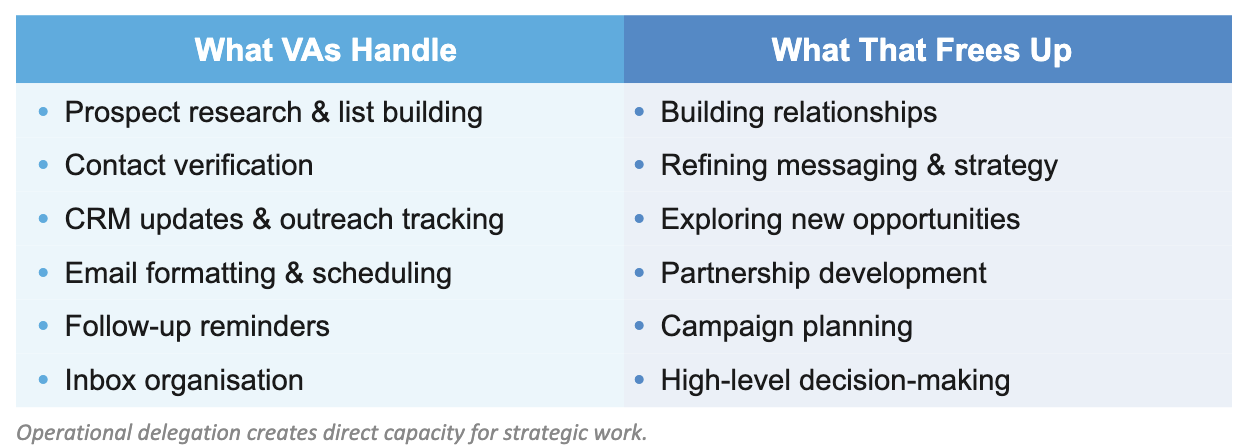
- Prospect research and list building
- Contact information gathering and verification
- CRM updates and outreach tracking
- Email formatting and scheduling
- Follow-up reminders and inbox organization
By taking over these responsibilities, VAs free up internal team members to focus on relationship building and strategy.
Supporting More Advanced Outreach Workflows
As outreach becomes more sophisticated, workflows often involve multiple tools, collaborators, and stages. Virtual assistants can help maintain order across these moving parts.
They can manage spreadsheets or CRM systems, ensure data is up to date, and keep campaigns running on schedule. This kind of operational support becomes increasingly important when businesses are running multiple campaigns at once.
In larger organizations, outreach efforts may expand into more structured initiatives, including partnerships, PR, and content collaborations. In these cases, having support that understands the workflow—even at a task level—helps maintain consistency across campaigns. This is particularly relevant in areas like link building for enterprises, where coordination, documentation, and steady execution are essential to keeping campaigns on track.
Delegation Improves Consistency
One of the biggest challenges in outreach is maintaining consistency over time. When tasks are handled ad hoc or by multiple team members with different approaches, results can vary.
Virtual assistants help standardize processes. Once a workflow is documented, a VA can follow it step by step, ensuring that each task is completed the same way every time. This consistency improves not only efficiency but also the overall quality of outreach.
It also makes it easier to refine and improve processes over time, since there is a clear system in place.
Reducing Bottlenecks in Growing Teams
As companies scale, bottlenecks often appear in unexpected places. Outreach is a common one. Tasks that once took an hour can start consuming entire days when volume increases.
Hiring full-time staff for every operational need isn’t always practical. Matching the right VA to the right task type provides a flexible alternative, allowing businesses to expand capacity without making long-term commitments.
This flexibility is especially useful for outreach campaigns, which may fluctuate in intensity depending on business goals or seasonal priorities.
Creating Space for Strategic Work
When operational tasks are offloaded, internal teams can focus on higher-impact work. Instead of spending time compiling lists or managing spreadsheets, they can invest in building partnerships, refining messaging, and exploring new opportunities.
This shift is often where the real value of delegation becomes clear. Outreach becomes more thoughtful and intentional when the team behind it isn’t overwhelmed by administrative work.
Virtual assistants don’t replace strategy—they support it by making execution smoother and more reliable.
Building a Sustainable Outreach System
Scalable outreach isn’t just about increasing volume. It’s about building a system that can handle growth without sacrificing quality. That requires clear processes, consistent execution, and the ability to adapt over time.
Virtual assistants contribute to all three. They help implement and maintain systems, ensure tasks are completed reliably, and provide the operational support needed to keep everything running.
For businesses looking to expand their outreach efforts, integrating task-based VA support into the process is often a practical and effective step. It allows teams to grow their efforts steadily while maintaining control and clarity across campaigns.