
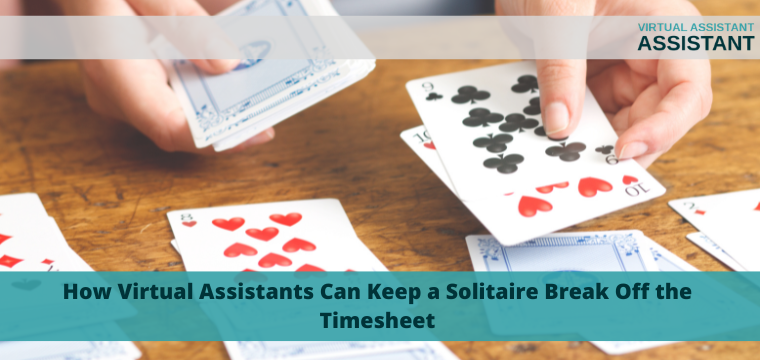
The last calendar invitation is sent, the client folder is updated, and there are a few minutes before the next task. For a freelance virtual assistant, that can be a reasonable moment for solitaire. It is also an easy moment to leave the wrong timer running.
In a browser game such as PlaySolitaire, Restart repeats the same deal while New Game replaces it with different cards. Those two choices matter when planning a personal break: either can quietly turn a finished attempt into another session. A useful routine therefore begins with the work record and ends with the clock, not with a winning board.
Table of Contents
Close the client task before dealing the cards
Start by finishing the small pieces of administration that explain what you have done. Save the document, record the task status and leave a clear next action. “Waiting for approval on the Thursday meeting time” is more useful than “calendar work.” The note gives you something definite to return to after the game.
If your agreement bills only time spent working on client tasks, stop that timer before starting a personal solitaire session. Do not assume a tracker will distinguish moving cards from moving entries in a spreadsheet. Billing arrangements differ, including agreed paid breaks or availability periods, so follow the terms you actually have rather than inventing a universal rule.
The practical aim is simple: the timesheet should describe the service the client agreed to buy. A personal game should not become an unexplained part of an administrative task.
Let a separate alarm decide when play stops
“One game” sounds like a clear limit, but it is not a reliable appointment in a working calendar. In Klondike, moving a red seven onto a black eight might uncover another card and open several new possibilities. A blocked board can become interesting again just as you were about to leave it.
Choose an available window and set an alarm outside the game before you start. If you have seven minutes free, that is the limit, not a prediction that every deal takes seven minutes. When the alarm sounds, leave the board even if the next move looks promising.
Restart and New Game are choices for another free period, not automatic extensions of this one. Solitaire does not have to be completed to count as time spent enjoying a game.
Keep availability separate from spare time
An empty inbox is not necessarily a break. An assistant covering live customer messages, a booking window or an imminent call may still need to respond promptly. Agree on those expectations with the client before treating a quiet spell as personal time.
For work organized around deliverables, a natural pause might come after sending a completed report and before a separately scheduled assignment. For live support, it may need to wait for an agreed break or a handover. The card game is optional; the service commitment is not.
Keep the game out of client screen sharing and use only devices and websites permitted by the relevant work policies. If recreational sites are blocked on a managed device, leave them blocked. Personal leisure is not a reason to work around a client’s security rules.
Do not confuse a game break with a screen break
Solitaire changes what you are doing, but it still involves looking at a display and often using the same mouse or keyboard. That distinction matters after a morning of inbox management.
The UK’s Health and Safety Executive advises that breaks or changes of activity should allow people to leave their workstation and move, or at least stretch and change posture. A browser game does not provide that movement by itself.
Make room for time away from the screen as well. Get a drink, stand up or walk before deciding whether you still want to play. There is no need to describe solitaire as a productivity treatment or claim that every assistant returns to work sharper after a deal. Enjoying it is a sufficient reason to choose it during suitable personal time.
Return to the task, then restart its timer
When the break ends, put the game away and read the next action you left. Check that the correct client and task are selected before resuming tracked work. This is particularly useful when one assistant serves several clients during the same afternoon.
Review the record while the sequence is still fresh. If a personal session was accidentally logged as client work, correct it through the tracking system’s normal process and explain any adjustment that needs clarification.
The routine should be easy to repeat: a finished task, an accurate record, a personal game and a deliberate return. Whether the cards reach the foundations is less important than keeping that sequence honest.