

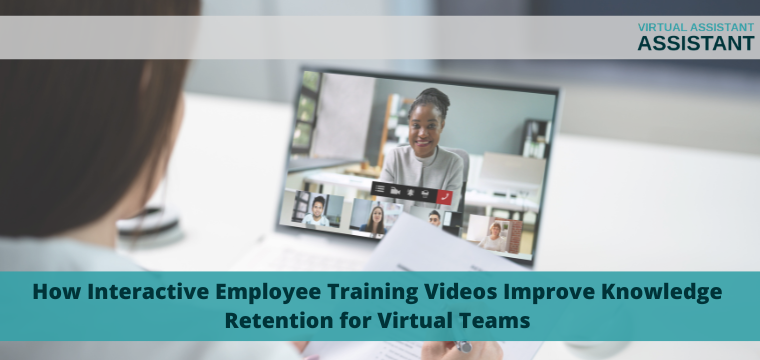
Interactive employee training videos improve knowledge retention for virtual teams by turning passive viewing into active learning. Instead of hitting play and hoping something sticks, employees make decisions, answer questions, and apply what they see in real time. This change makes a massive difference in how much information actually gets absorbed, remembered, and applied on the job.
What if your team is forgetting most of your training the moment the video ends? Most organizations refuse to confront this reality. Passive video training has a serious retention problem, especially when learners are remote, distracted, and multitasking across five browser tabs.
Interactive videos flip the model completely. They demand attention, reward engagement, and give managers the data to see exactly what is landing and what isn’t. The result is faster ramp-up times, sharper skill retention, and virtual teams that apply what they learn.
Table of Contents
Why Do Traditional Videos Fail Remote Employees?
Traditional linear training videos were built for classrooms and conference rooms. They don’t work for distributed teams working from home offices, coffee shops, and co-working spaces.
Watching a talking-head video on Zoom fatigue is not learning. It’s background noise most employees only half-remember an hour later. Some common failure points of passive video training include:
- Zero interaction that lets attention drift within the first two minutes
- One-size-fits-all pacing that bores fast learners and loses slow ones
- No feedback loop for managers to spot who actually understood the material
- Weak accountability since anyone can hit play and walk away
- Poor accessibility for global teams working in different languages and time zones
The best modern employee training videos solve these problems by building interactivity, personalization, and real-time analytics directly into the video experience.
Employees stay engaged because the video responds to their choices. Additionally, managers finally get visibility into what training is actually working.
What Makes Interactive Video Training Work Better?
Interactive video works because it aligns with how the human brain actually retains information. Active recall and applied practice beat passive viewing every time. When employees make decisions while watching a video, they encode the information more deeply and remember it for much longer.
Here are key features that drive better retention:
Branching scenarios that let employees make real-world choices and see the consequences
- In-video quizzes that test comprehension before the material moves on
- Personalized content pathways adapted to each employee’s role or skill level
- Clickable hotspots that let learners explore concepts on their own terms
- Real-time performance analytics that show managers where retention is strong and where it’s weak
Together, these features turn training from a compliance checkbox into a genuine skill-building system. As a result, you can enjoy long-term gains.
How Do You Justify the Investment of Interactive Employee Training Videos to Leadership?
Interactive video training isn’t the cheapest option, but the return justifies the cost quickly. Companies invest a lot in training programs, spending nearly $1,200 per worker each year in the US, according to Harvard Business School research. Unfortunately, most of that money is wasted on content nobody remembers.
Interactive video changes the math by making every dollar of training spend actually stick. Leadership questions worth answering with interactive video:
- How fast do new hires reach full productivity?
- How many skill mistakes are we still catching in the field?
- How much time do managers spend re-explaining material employees already saw?
- Which training modules are producing measurable skill gains?
Interactive video delivers hard data on all four questions. With this positive ROI story, leadership is likely to respond positively.
Elevate Your Virtual Teams With Interactive Employee Training Videos
Virtual teams are the future of work, and they deserve training built for how they operate. Interactive employee training videos meet remote employees where they are, respect their attention, and give them the tools to grow inside distributed organizations.
The teams that win are already investing in training designed for engagement rather than compliance. Subscribe to our newsletter to get more tips on employee productivity.
